What is Ecommerce SEO? Complete Guide with Strategy & Checklist

Your online store has amazing products, but potential customers cannot find you on Google. Meanwhile, your competitors appear on the first page for searches your target audience is making.
This happens because they understand what is ecommerce SEO and use it well. Without proper SEO, even the best products remain hidden from people who want to buy them.
This guide explains everything about e-commerce SEO in simple terms. You’ll learn what it is, why it matters, and how to apply it to grow your online store. With the right e-commerce SEO services, you can improve search visibility, attract targeted traffic, and turn visitors into customers.
What Is E-commerce SEO?
Think of it like this: Google is a huge library with millions of online stores. E-commerce SEO helps Google understand your store better. This way, Google can show your store to people looking for your products.
The main goal is simple. You want to rank on the first page of Google. According to a 2024 study by Backlinko, the first result on Google gets 27.6% of all clicks. If your store appears on the second page, very few people will find you.
Why E-commerce SEO Is Important?
- More people use Google to find products. If your store does not appear in these searches, you lose customers to competitors.
- SEO brings free, ongoing traffic. Paid ads stop working when you stop paying. But SEO keeps bringing visitors to your store even when you are not actively working on it. This makes it cost-effective in the long run.
- SEO customers have high buying intent. When someone searches “buy running shoes online,” they are ready to purchase. These visitors convert better than random traffic from social media or other sources.
- You build trust and credibility. Stores that rank high on Google appear more trustworthy to customers. People believe Google shows the best results first. This perception helps your brand image.
What Are E-commerce SEO Basics That Every Beginner Should Know?
- Keywords are the starting point. Keywords are the words and phrases people type into Google, such as “cotton t-shirts for men” or “best laptop under 50000.” A strong content strategy for ecommerce starts with identifying the exact terms your customers use and naturally incorporating them into your pages.
- Product page optimization matters most. Each product page needs a unique title, a clear description, and good images. Use keywords naturally in your product titles and descriptions. Make sure each page tells Google exactly what you are selling.
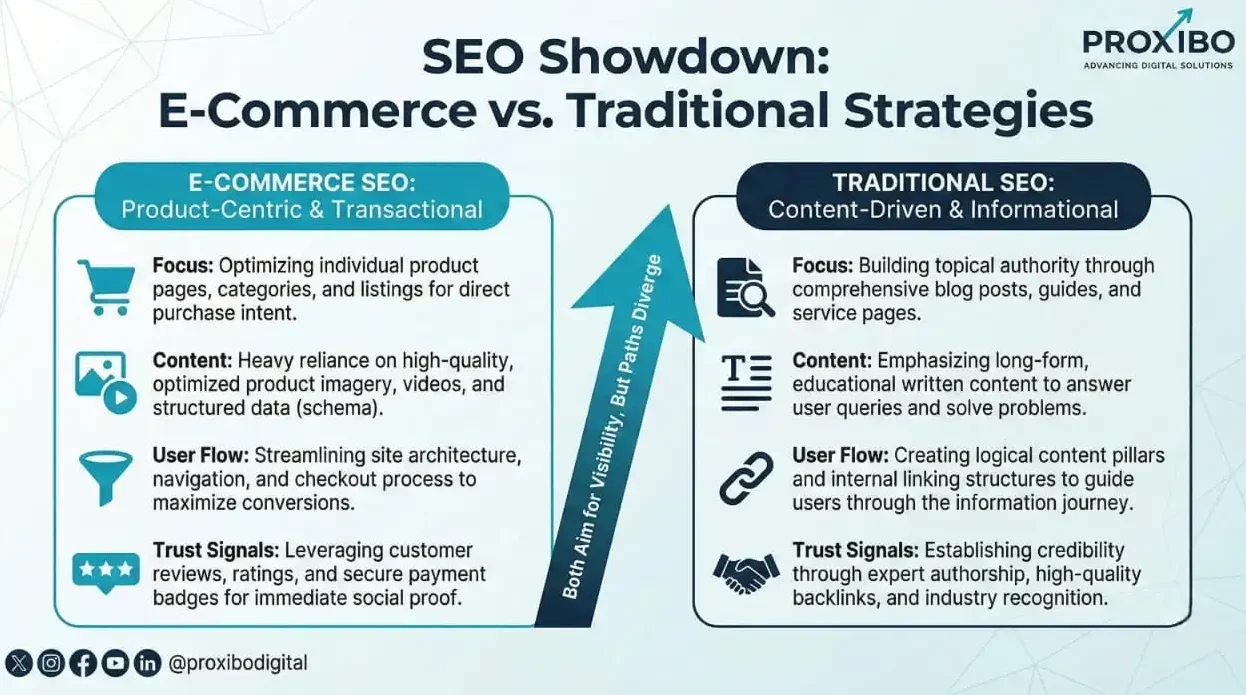
- Site structure affects rankings. Your store should be organized logically. Create clear categories and subcategories. A visitor should reach any product in three clicks or fewer. This helps both users and search engines navigate your store easily.
- Mobile optimization is essential. More than 59% of online shopping happens on mobile devices. Your store must work perfectly on phones and tablets. Google now ranks mobile-friendly sites higher in search results.
What Are Essential E-commerce SEO Strategy Components?
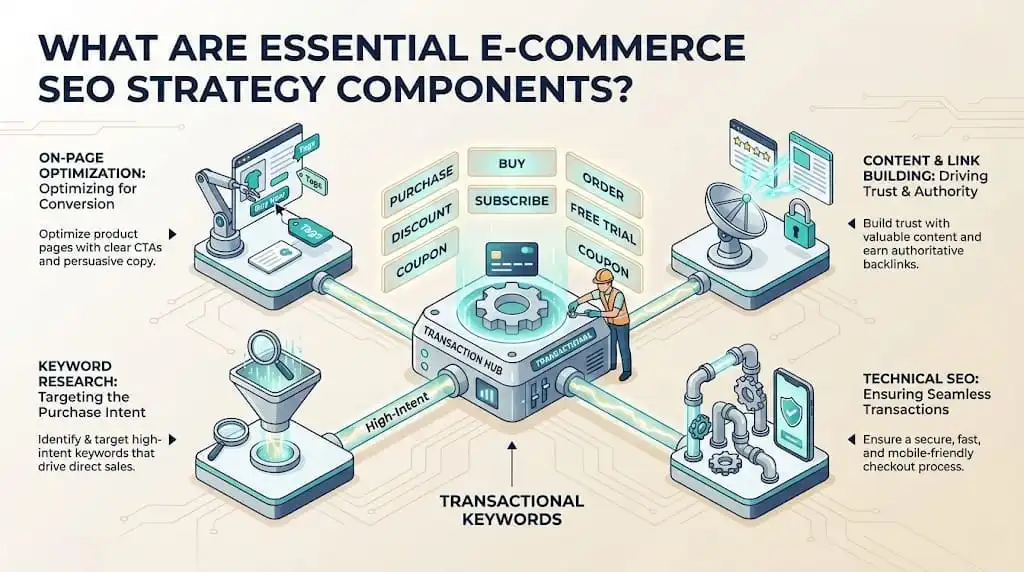
1. Keyword Research Guides Everything:
Start by finding keywords with good search volume and reasonable competition. Use tools like Google Keyword Planner or answer simple questions your customers ask.
2. On-page Optimization Improves Individual Pages:
This covers title tags, meta descriptions, header tags, and the overall quality of your content. Creating unique, detailed descriptions for each product is essential, as avoiding copied manufacturer text highlights the technical benefits for ecommerce by preventing duplicate content that can harm rankings.
3. Content Marketing Builds Authority:
Create blog posts, buying guides, and comparison articles. These pages attract visitors at different stages of their buying journey.
4. Link Building Increases Domain Authority:
When other websites link to your store, Google sees this as a trust signal. Earn links through quality content, partnerships, and digital PR.
5. Technical Optimization Keeps Everything Running Smoothly:
Fix broken links, create proper redirects, and ensure your site is crawlable. Use schema markup to help Google understand your products better.
What Is the Step-by-Step Process to Build Your E-commerce SEO Strategy?
- Step 1: Conduct thorough keyword research
- Step 2: Optimize your site structure
- Step 3: Optimize product pages systematically
- Step 4: Create supporting content
- Step 5: Fix technical issues
- Step 6: Build quality backlinks gradually
- Step 7: Monitor and adjust regularly
- Step 8: Improve user experience continuously
Conclusion
E-commerce SEO, as part of complete digital marketing services, helps your online store get found by customers searching for products you sell. It drives targeted traffic, builds trust, and delivers long-term results without ongoing advertising costs.
Start by understanding the basics, then build a comprehensive strategy covering keywords, content, technical optimization, and user experience. For expert help in implementing these steps effectively, contact Proxibo and take your online store’s growth to the next level.
Frequently Asked Question
Most stores see initial improvements within three to six months of consistent SEO work. However, significant results typically appear after six to twelve months.
You can handle basic SEO yourself using online resources and tools. However, hiring experts saves time and often delivers better results faster. An experienced agency knows proven strategies and avoids common mistakes.
Google considers hundreds of factors, but key ones include page speed, mobile-friendliness, quality content, backlinks, and user experience.
ABOUT THE AUTHOR

Related Posts