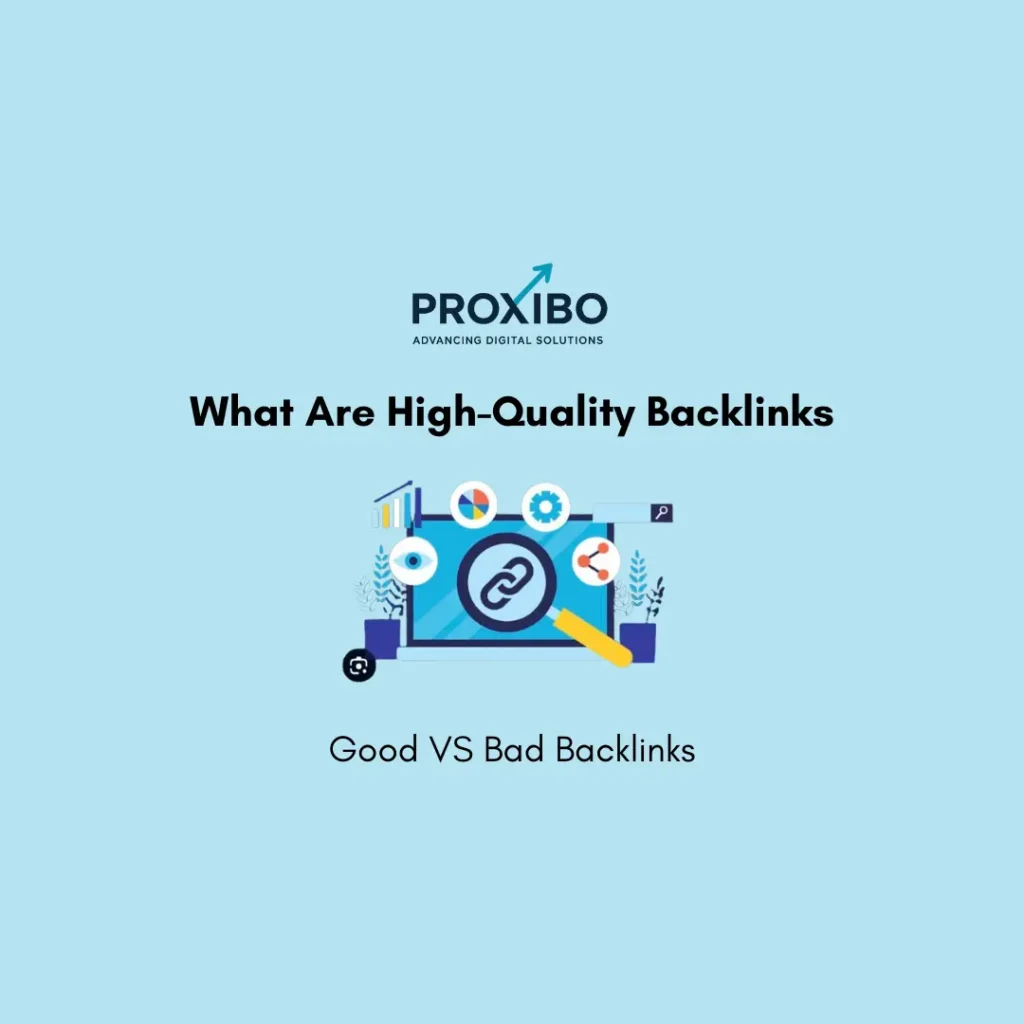
What Are High-Quality Backlinks? Complete Guide to Identifying Good Links

You’ve built backlinks to your website. You spent hours reaching out to other sites. But your rankings haven’t improved. Why?
The problem isn’t the number of backlinks—it’s the quality. Not all backlinks help your SEO. Some do nothing, and a few can even hurt your rankings. Understanding what are high-quality backlinks is essential to building links that actually improve authority, trust, and search visibility.
High-quality backlinks are links from trusted, relevant websites that boost your search engine rankings. These links carry real weight with Google.
This guide explains exactly what makes a backlink high-quality. You’ll learn how to identify valuable links and avoid harmful ones that waste time and effort and how professional off-page SEO services can help you build a strong, authoritative backlink profile more efficiently.
What are Backlinks and Why Does Quality Matter?
Backlinks are links from other websites pointing to yours. When someone clicks that link, they land on your page. Search engines follow these links to discover and evaluate your content.
Quality matters because Google uses backlinks to determine your website’s trustworthiness. High-quality backlinks tell Google your content is valuable. Low-quality backlinks send the opposite message.
According to Moz, backlinks remain one of Google’s most important ranking factors. The search engine giant has used links to evaluate web pages since its creation.
What Characteristics Define High-Quality Backlinks?
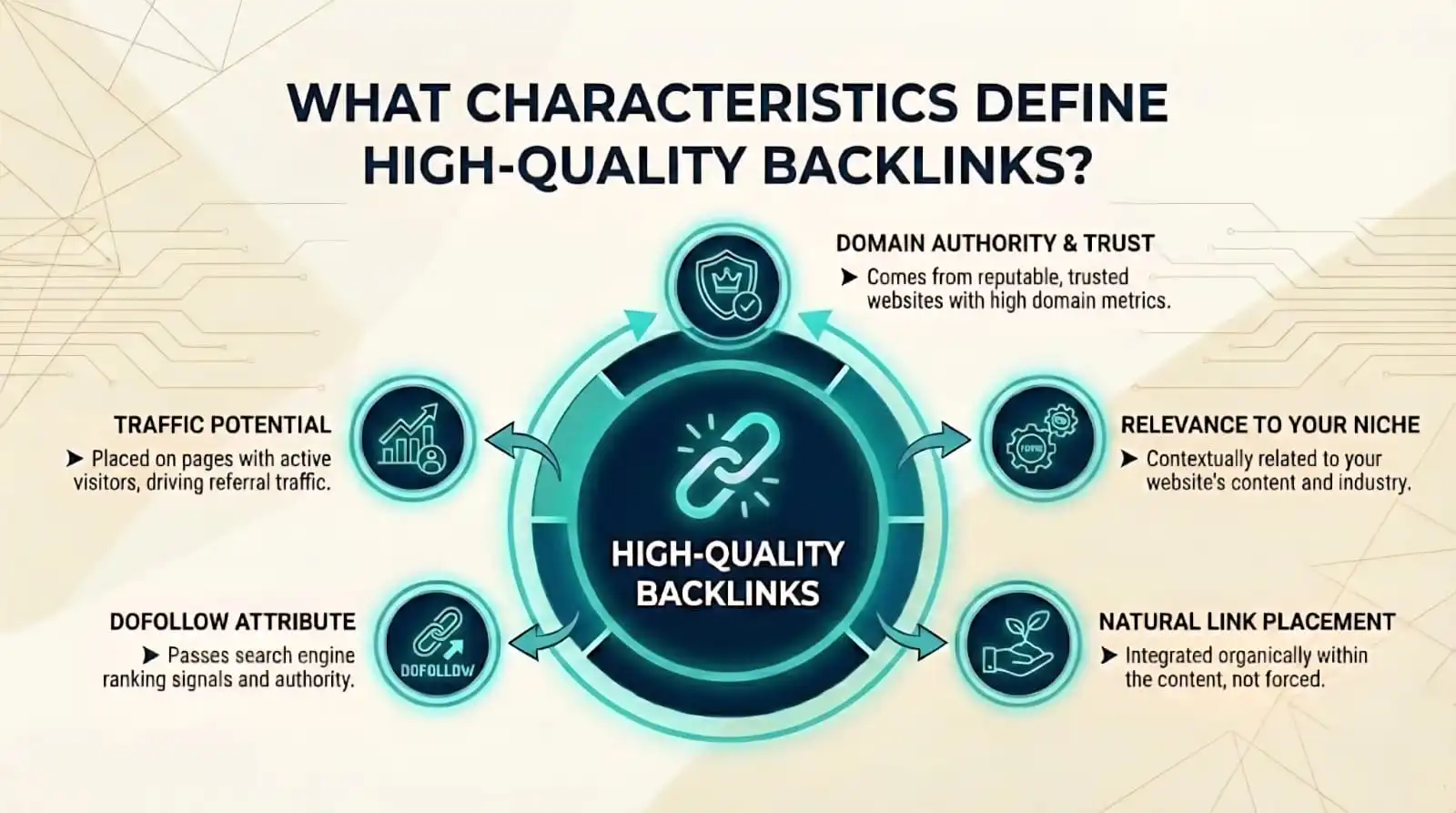
1. Domain Authority and Trust
2. Relevance to Your Niche
Relevant backlinks come from websites in your industry or related fields. A link from a website about cooking won’t help a technology blog rank better.
According to Ahrefs’ research on quality backlinks, relevance matters as much as authority. Google wants to see that websites in your field recommend your content.
3. Natural Link Placement
The quality of backlinks depends heavily on where they appear. Editorial links within main content carry the most value. These links are placed naturally because the content genuinely references your site.
Footer and sidebar links provide less value. Google views contextual links within articles as stronger endorsements than site-wide links.
4. Dofollow Attribute
Dofollow links pass SEO value from one site to another. These links don’t include any special tags telling search engines to ignore them.
5. Traffic Potential
Quality backlinks drive actual visitors to your website. If nobody clicks a link, it provides limited value beyond its SEO benefit.
Check if the linking website receives real traffic. A link from a popular blog with engaged readers delivers more value than one from a rarely-visited site.
Read More: What are Different Types of Backlinks
What Makes a Backlink’s Placement Important?
1. Editorial Content Links
2. Header and Body Placement
Links placed near the top of an article or within the first few paragraphs often carry more value. Google assumes content referenced early in an article is more important to the topic.
3. Surrounded by Relevant Content
The text around your backlink should relate to your content. If an article about email marketing links to your email marketing guide, the context reinforces relevance.
Generic anchor text like “click here” with no context provides less value than descriptive anchor text within relevant surrounding content.
4. Above the Fold Visibility
Links visible without scrolling often perform better. Users click these links more frequently, and Google may value them higher based on their prominence.
What Strategies Help Earn High-Quality Backlinks?
1. Create Link-Worthy Content:
Content attracts backlinks naturally when it provides unique value. Original research, comprehensive guides, and useful tools earn links without outreach.
Articles with titles starting with “What” or “Why” get 25.8% more backlinks than other topics. People naturally link to content that answers common questions.
2. Build Genuine Relationships
Connect with other website owners, bloggers, and journalists in your industry. Relationships lead to natural link opportunities over time.
Engage with content in your niche. Leave thoughtful comments, share valuable articles, and offer help without expecting immediate returns.
3. Focus on Digital PR
Digital PR has become the most effective link-building method, making it an important part of any SEO audit checklist. Pitch your unique insights, data, or stories to journalists and publications. Media coverage provides high-authority backlinks from trusted news sources, which should be evaluated regularly in your SEO audit checklist.
4. Contribute Guest Posts
Write articles for reputable websites in your industry. Guest posting remains popular, with 38.9% of marketers using this method.
5. Leverage Existing Relationships
Partners, suppliers, clients, and business associations often provide natural linking opportunities. These relationships create legitimate, relevant backlinks.
Conclusion
This guide explains exactly what makes a backlink high-quality. You’ll learn how to identify valuable links and avoid harmful ones that waste time and effort—and how working with an experienced digital marketing company offering professional off-page SEO services can help you build a strong, authoritative backlink profile more efficiently.
The ideal title tag length is 50–60 characters. Use the title tag examples from this guide to create effective titles for different page types. Start with the most important pages and systematically optimize the rest of your site contact us now if you need expert help.
Frequently Asked Question
There's no strict minimum, but most SEO professionals look for links from sites with a Domain Authority above 30.
Natural backlinks occur organically when someone finds your content valuable and links to it without being asked. Unnatural backlinks come from manipulation like buying links, participating in link schemes, or using automated link-building tools.
Quality matters far more than quantity. Research shows the #1 result on Google has 3.8 times more backlinks than positions 2-10, but these are quality links from relevant sources.
Backlinks can be created by publishing high-quality content, guest posting on relevant sites, earning editorial mentions, building relationships, and promoting content through digital PR.
ABOUT THE AUTHOR

Related Posts