Types of Backlinks: Complete Guide to Backlink Types for SEO Success

Backlinks power your SEO success. They act like votes from other websites, telling Google your content matters. But not all backlinks are equal.
Understanding different types of backlinks helps you build a stronger SEO strategy. You’ll know which links to pursue and which ones to avoid.
This guide breaks down every backlink type you need to know. You’ll learn how different backlinks work, which ones matter most, and how to build them effectively along with how professional off-page SEO services can help you strengthen your backlink profile and improve search rankings.
What are Backlinks and Why Do They Matter?
Google views backlinks as recommendations. The more quality websites that link to you, the more trustworthy your site appears. This trust translates directly into better rankings.
Backlinko research shows that top-ranking pages have approximately 3.8 times more backlinks than lower-ranked pages. This correlation between backlinks and rankings remains strong in 2025.
What are the Main Types of Backlinks Based on Link Attributes?
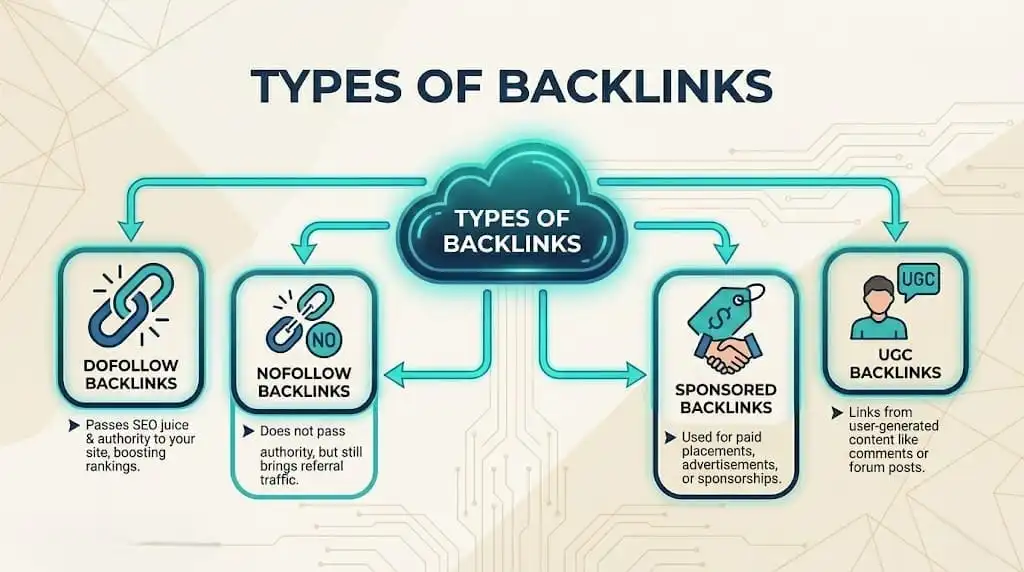
There are different types of backlinks, and each plays a unique role in SEO. Natural backlinks come from other websites linking to your content organically, while manual backlinks are earned through outreach, guest posting, or partnerships. Editorial and high-authority backlinks are the most valuable because they signal trust and relevance to search engines.
1. Dofollow Backlinks
Dofollow links pass SEO value from one website to another. They’re the most valuable type for off page SEO rankings. When an authoritative site gives you a dofollow link, it boosts your domain authority.
These links don’t need special tags. Every link is dofollow by default unless marked otherwise. Most natural backlinks you earn fall into this category.
2. Nofollow Backlinks
Nofollow links include a special tag that tells search engines not to pass SEO value. The tag looks like this: rel=”nofollow”. These links won’t directly improve your rankings.
Social media links, many blog comments, and some news articles use nofollow tags. These links shouldn’t be ignored just because they’re nofollow.
3. Sponsored Backlinks
Sponsored links mark paid placements or advertisements. They use the rel=”sponsored” attribute. Google requires this tag for any link you paid for.
These links don’t pass direct SEO value, but they increase visibility. Many legitimate sponsorships and partnerships involve sponsored links.
4. UGC Backlinks
User-generated content links carry the rel=”ugc” tag. These appear in forum posts, blog comments, and community discussions. Google uses this tag to identify content created by users rather than site owners.
Understanding these attributes helps you evaluate backlink opportunities. A dofollow link from a quality website remains the gold standard.
What are the Different Types of Backlinks Based on Source Quality?
1. High-Authority Backlinks
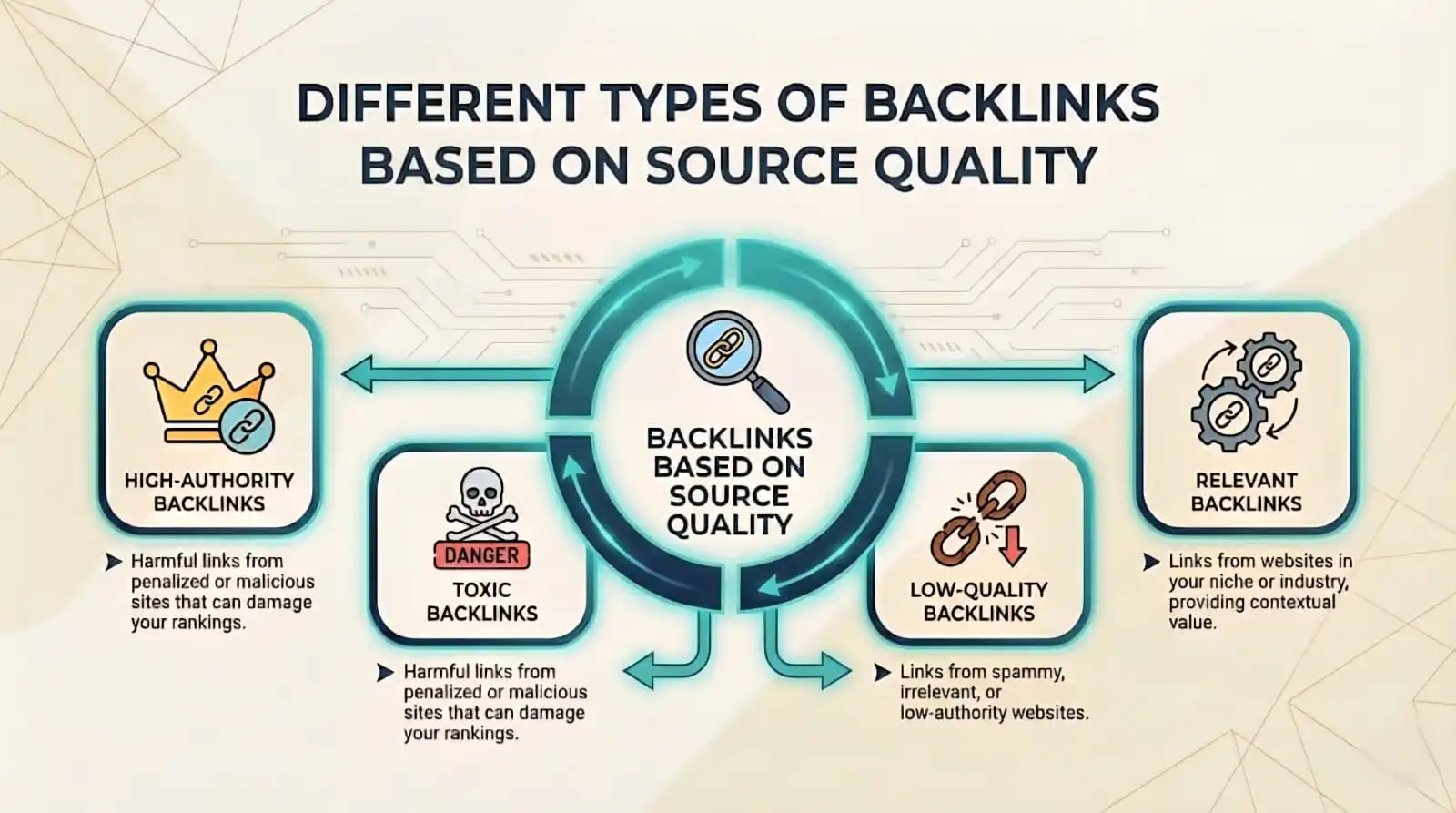
These come from websites with strong domain authority and reputation. Links from major news sites, government websites, or industry leaders carry enormous weight.
According to Ahrefs, a single high-authority backlink can impact rankings more than dozens of low-quality links. These links are harder to earn but deliver exceptional results.
2. Relevant Backlinks
Relevant links come from websites in your industry or niche. A link from a related website tells Google your content is contextually appropriate.
3. Low-Quality Backlinks
These come from spam websites, link farms, or irrelevant sources. They offer no value and can potentially harm your rankings. Google’s algorithms identify and devalue these links.
4. Toxic Backlinks
Toxic backlinks actively harm your SEO. They come from penalized websites, spam networks, or sites with malicious content. These links can trigger manual penalties from Google.
You should regularly check for toxic backlinks using tools like Google Search Console. The disavow tool lets you tell Google to ignore specific harmful links.
What are the Types of Backlinks Based on Link Placement?
1. Editorial Backlinks
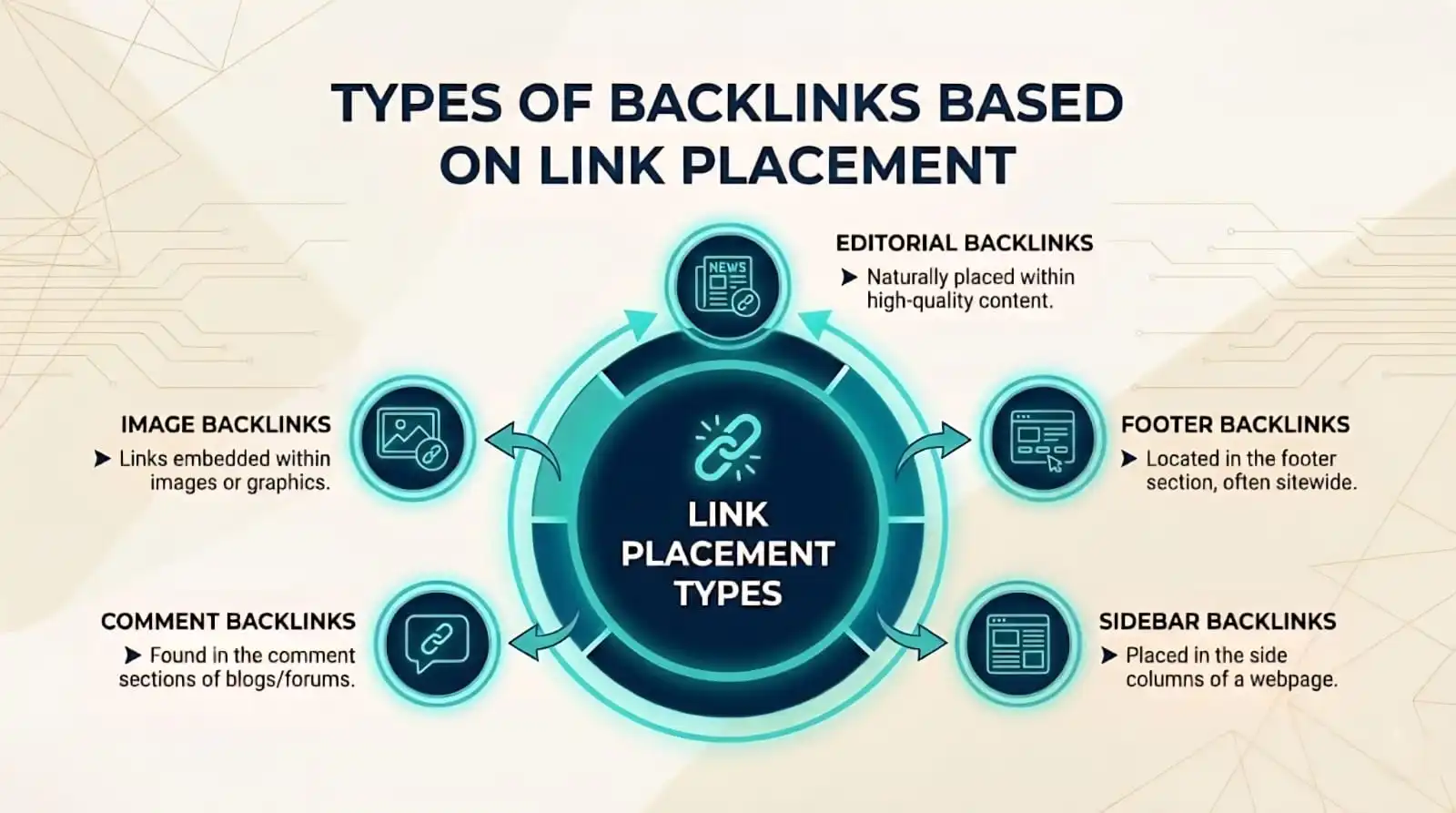
These appear naturally within content. A blogger or journalist includes your link because your content adds value to their article. Editorial links demonstrate the importance of backlinks as the most valuable type.
2. Footer Backlinks
Footer links are typically site-wide, appearing on every page. While they count, they carry less weight than editorial links. Google views them as less significant endorsements.
3. Sidebar Backlinks
Sidebar links appear in the side columns of websites. They might be in blogrolls, resource lists, or widget areas.
4. Comment Backlinks
These come from blog comments where you can include your website link. Most blog comment links are nofollow.
Comment links drive little SEO value but can generate referral traffic. They work best when you leave thoughtful, valuable comments rather than spam.
5. Image Backlinks
Image backlinks work particularly well for infographics, charts, and original photography. Create linkable visual assets to earn these naturally.
What are the Different Types of Backlinks Based on Link Building Methods?
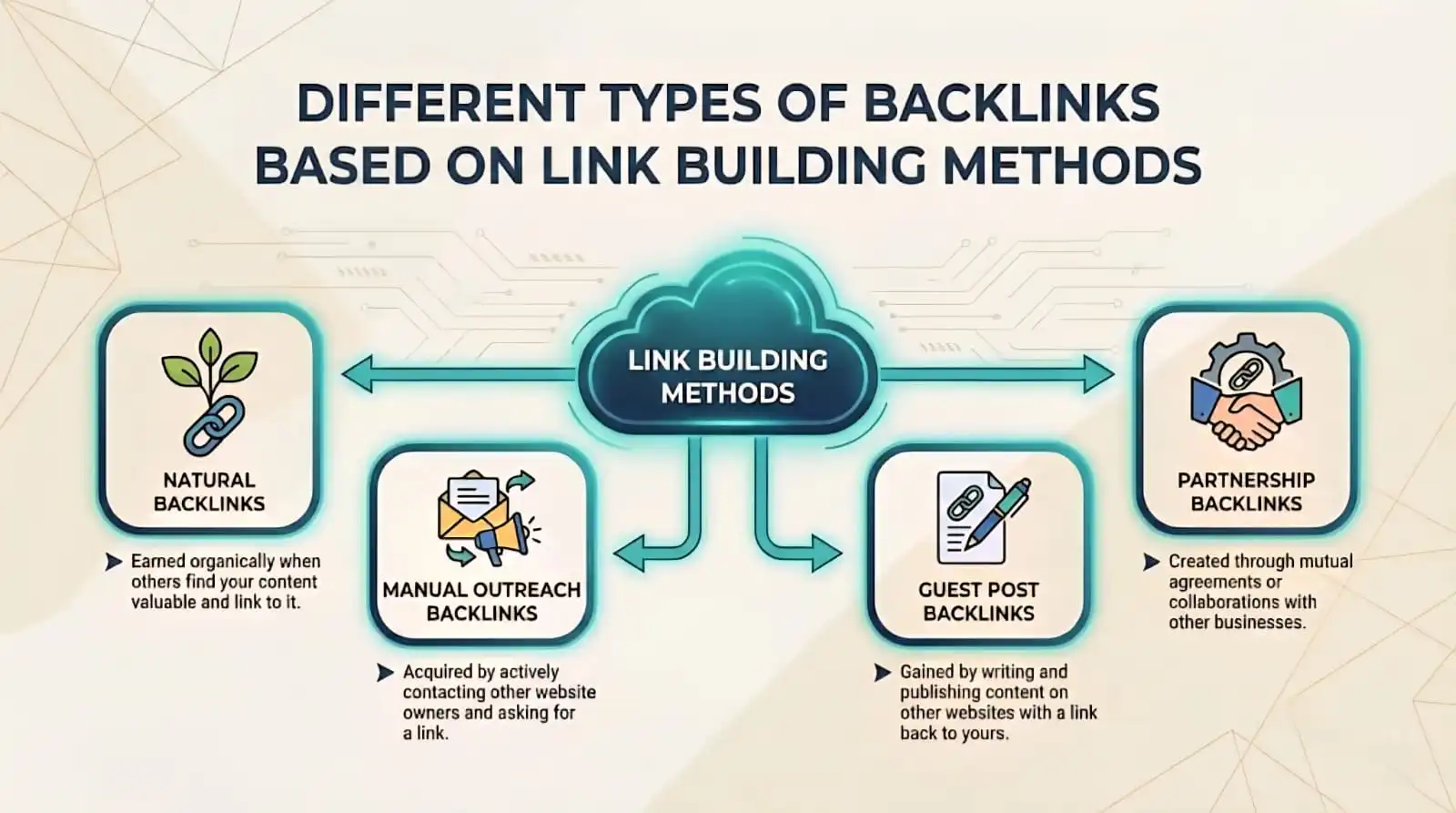
1. Natural Backlinks
You earn natural backlinks without asking. People find your content valuable and link to it spontaneously. These represent high quality backlinks as the holy grail.
Creating exceptional content increases natural backlink opportunities. Original research, comprehensive guides, and useful tools attract natural links.
2. Manual Outreach Backlinks
You actively reach out to website owners requesting links. This includes guest posting, broken link building, and resource page outreach.
3. Guest Post Backlinks
You write articles for other websites in exchange for backlinks. Guest posting remains one of the most popular link-building methods.
4. Partnership Backlinks
These come from business partnerships, supplier relationships, or collaborations. Partners naturally link to each other’s websites.
Partnership links are legitimate and valuable. They represent real business relationships rather than artificial link schemes.
What are the Best Practices for Building Different Types of Backlinks?
1. Focus on Quality Over Quantity
According to Backlinko research, 93.8% of link builders prioritize quality over quantity. Ten relevant, high-authority backlinks outperform one hundred low-quality links.
2. Diversify Your Backlink Profile
Don’t rely on one backlink type or source. A natural link profile includes various backlink types, anchor texts, and source domains.
3. Monitor Your Backlink Profile
Regularly audit your backlinks using tools like Google Search Console or Ahrefs. Identify new links, track lost links, and spot toxic backlinks.
Remove or disavow harmful links that could hurt your rankings. Keep your backlink profile clean and healthy.
4. Build Relationships First
Focus on building genuine relationships with other website owners, bloggers, and journalists. Relationships lead to natural link opportunities.
Conclusion
Understanding different types of backlinks is essential for SEO success. From dofollow editorial links to nofollow social mentions, each type plays a role in your overall strategy. Focus on earning high-quality, relevant backlinks through valuable content and genuine relationships. Partnering with an experienced digital marketing company can help you build links the right way while avoiding shortcuts like buying links or using spam tactics
The ideal title tag length is 50–60 characters. Use the title tag examples from this guide to create effective titles for different page types. Start with the most important pages and systematically optimize the rest of your site contact us if you need expert guidance.
Frequently Asked Question
Use Google Search Console to see all backlinks pointing to your site.
Quality backlinks come from relevant, authoritative websites with good content. Check the linking site's domain authority, relevance to your niche, and content quality.
Yes, contact the website owner and request removal. If they don't respond, use Google's Disavow Tool in Search Console to tell Google to ignore specific links.
Link building is one component of SEO off-page activities. Off-page SEO includes all activities outside your website that improve rankings.
ABOUT THE AUTHOR

Related Posts