Benefits of Technical SEO in Ecommerce Site: Complete Guide

Your e-commerce store displays perfectly on your screen, but search engines cannot find half of your products.
This guide explains the benefits of technical SEO in ecommerce site performance. You will learn what technical SEO includes, why it matters specifically for online stores, and how to fix common issues that block your success.
What is Technical SEO for Ecommerce Websites?
Technical SEO covers the behind-the-scenes elements that help search engines access, understand, and rank your website. For e-commerce stores, this becomes especially complex due to thousands of product pages, categories, and constantly changing inventory.
Technical SEO includes site speed, mobile optimization, URL structure, XML sitemaps, robots.txt files, canonical tags, schema markup, and security protocols. Each element plays a specific role in making your store accessible and understandable to search engines.
According to Google’s guidelines, technical factors significantly impact how they discover, crawl, and index web pages. Stores with poor technical SEO lose visibility even when they have great products and content.
Why Does Technical SEO Matter More for Ecommerce Than Other Sites?
E-commerce stores face unique technical challenges that blogs and simple websites never encounter. Understanding these differences helps you appreciate why technical SEO deserves your attention.
1. Scale Creates Complexity
Most e-commerce stores have hundreds or thousands of pages. Small technical issues multiply across your catalog, creating massive problems. A blog with 50 pages can handle issues that would cripple a store with 5,000 products.
2. Inventory Changes Constantly
Products go out of stock, new items arrive, and seasonal items appear and disappear. Each change creates potential technical issues. Search engines may try indexing pages that no longer exist or miss new products entirely.
3. Duplicate Content Happens Easily
What are the Key Benefits of Technical SEO in Ecommerce Sites?
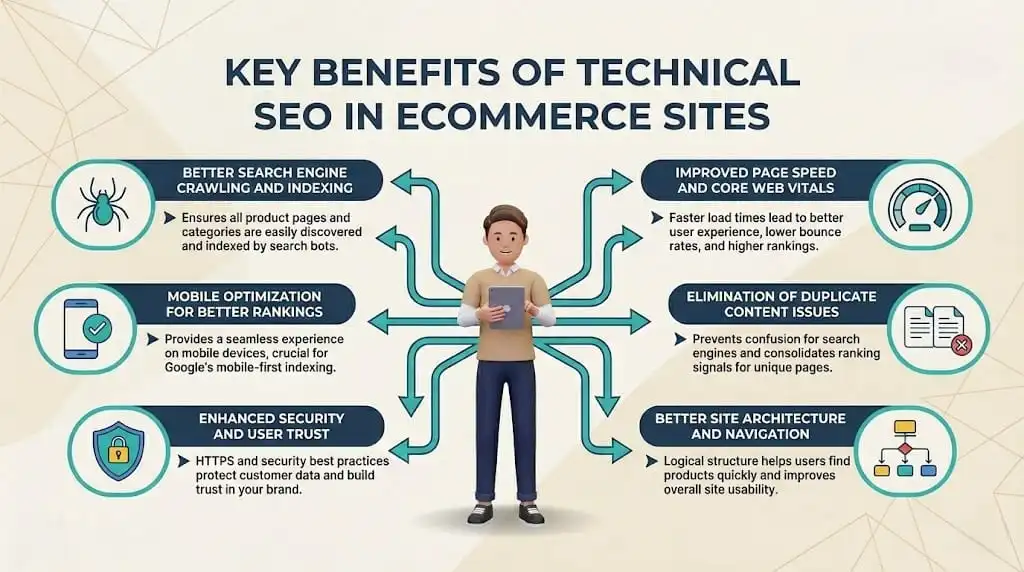
1. Better Search Engine Crawling and Indexing
When search engines crawl efficiently, they discover new products faster and update existing listings promptly. This means your inventory changes reflect in search results quickly, capturing demand when products are actually available.
2. Improved Page Speed and Core Web Vitals
Fast-loading pages rank higher and convert better. Technical optimization reduces file sizes, leverages browser caching, and minimizes server response times. These improvements directly boost your Core Web Vitals scores.
Google uses Core Web Vitals as ranking factors. According to research, sites meeting Core Web Vitals thresholds see 24% lower abandonment rates.
3. Mobile Optimization for Better Rankings
Mobile-first indexing means Google primarily uses your mobile site for ranking. Technical SEO ensures your mobile experience matches or exceeds desktop quality. Responsive design, fast mobile loading, and touch-friendly navigation all contribute to better mobile performance.
4. Elimination of Duplicate Content Issues
Technical solutions like canonical tags tell search engines which version of similar pages to index. This consolidates ranking signals and prevents your pages from competing against each other.
Parameter handling in URLs prevents duplicate content from filtering and sorting options. Technical configuration ensures search engines see one definitive version of each product page.
5. Enhanced Security and User Trust
HTTPS encryption protects customer data and builds trust. Google confirmed HTTPS as a ranking signal. Secure sites rank higher and convert better because customers feel safe entering payment information.
Technical security measures also prevent hacking, malware, and other issues that can get your site removed from search results entirely. Security and SEO work together to protect your business.
6. Better Site Architecture and Navigation
Logical ecommerce site structure helps search engines understand your catalog organization. Clear hierarchies from homepage to categories to products create efficient crawl paths.
Breadcrumb navigation, proper internal linking, and shallow site depth all contribute to better architecture. These technical elements benefit both SEO and conversion rates.
How Do You Identify Crawlability and Indexing Issues in Ecommerce?
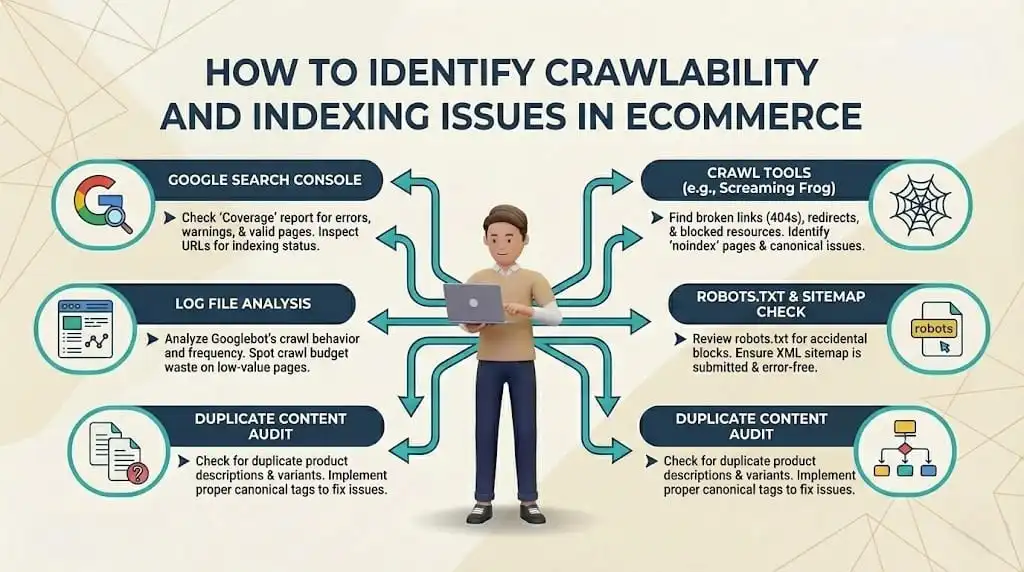
1. Using Google Search Console
2. Performing an Ecommerce Technical SEO Audit
- Check XML sitemaps
- Review the robots.txt file
- Identify broken links
- Analyze site speed
- Check mobile usability
- Find duplicate content
What Tools Help with Technical SEO for Ecommerce?
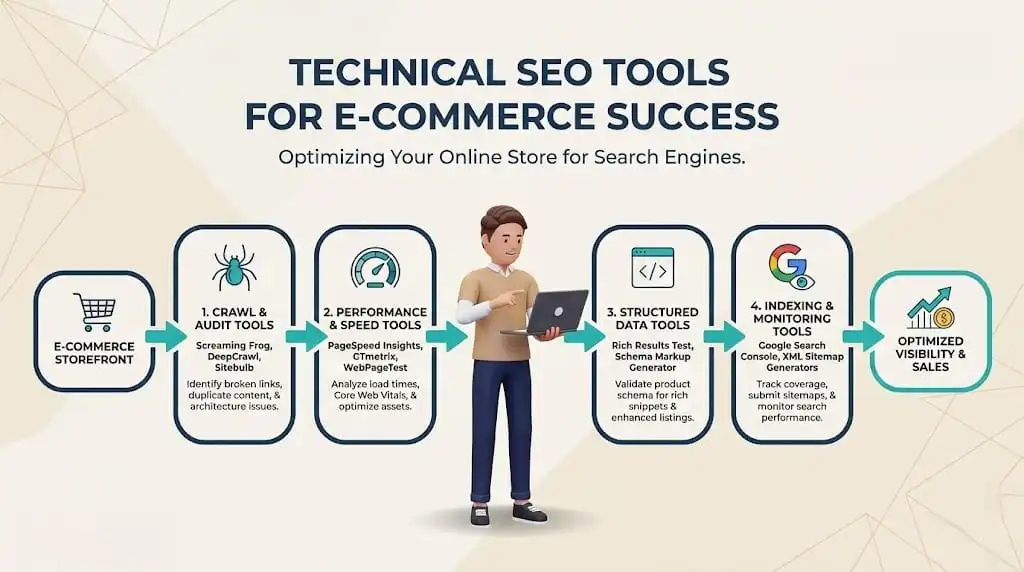
1. Google Search Console is Essential
This free tool provides direct insights from Google about how they see your site. Check coverage issues, mobile usability, Core Web Vitals, and more. Every e-commerce site needs Search Console monitoring.
2. Screaming Frog Crawls Your Site
This desktop tool crawls websites like a search engine, revealing technical issues across your entire catalog. Find broken links, redirect chains, duplicate content, missing meta tags, and more. The free version works for sites under 500 URLs.
3. Google PageSpeed Insights Measures Speed
This tool analyzes page performance and suggests specific improvements. Focus on Core Web Vitals metrics that directly impact rankings. Aim for green scores in all categories.
Conclusion
The benefit of technical SEO in ecommerce site success cannot be overstated. As a core part of digital marketing services, technical optimization creates the foundation that allows your content and products to rank well. Fast, mobile-friendly, properly structured websites with clean code and strong security consistently outperform technically weak competitors in search results.
The ideal title tag length is 50–60 characters. Use the title tag examples from this guide to create effective titles for different page types. Start with the most important pages and systematically work through the rest of the site—and if you need expert help, contact Proxibo to optimize your site for long-term SEO success.
The ideal title tag length is 50-60 characters. Use the title tag examples from this guide to create effective titles for different page types. Start with the most important pages and systematically work through the rest of the site.
Frequently Asked Question
Perform comprehensive technical audits quarterly for ongoing monitoring.
E-commerce sites have much deeper hierarchies with categories, subcategories, and thousands of product pages. Poor structure makes it hard for search engines to crawl everything efficiently. Blogs have flatter structures with fewer pages.
Site speed and mobile optimization rank as top priorities because they impact both rankings and conversions directly.
E-commerce on-page SEO means optimizing product and category pages with the right keywords, titles, descriptions, images, URLs, internal links, and technical elements so search engines can understand, rank, and show your products to buyers.
ABOUT THE AUTHOR

Related Posts